

Collagen Peptides: Why Structural Protein Matters More Than You Think?
Collagen is often associated with skin, hair, and nails, but its role in the body goes much deeper. It is one of the most important structural proteins, forming the framework of joints, connective tissue, bones, tendons, and even the gut lining.
As we age, collagen production naturally declines - a process that begins as early as our mid-20s. This doesn’t only affect appearance. Over time, it can influence how the body moves, recovers, and maintains structural strength. That’s why collagen peptides have become an important topic in longevity-focused nutrition.
What are collagen peptides?
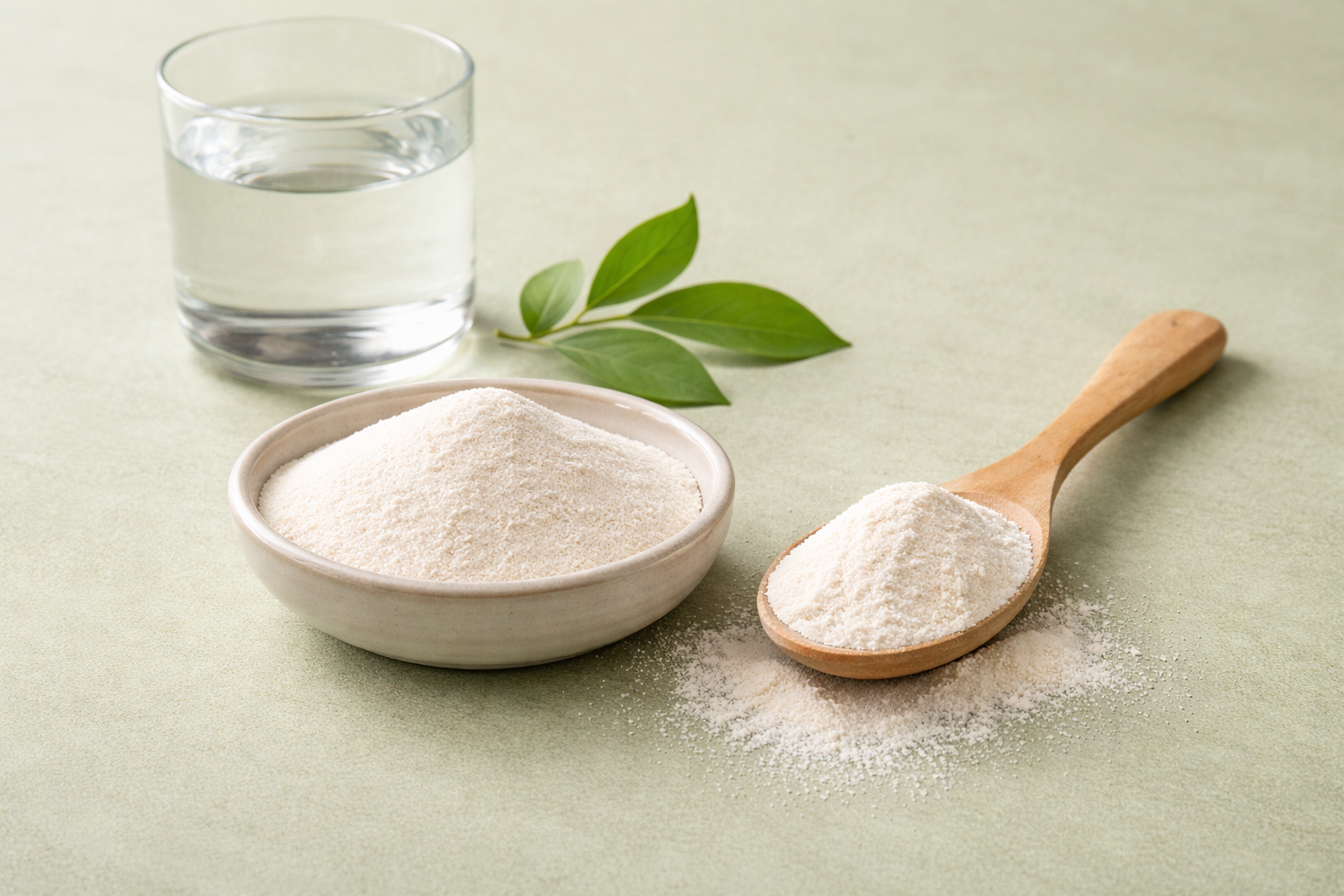
Collagen peptides are collagen proteins that have been broken down into smaller amino acid chains through hydrolysis. This process makes them easier to digest and absorb. Once in the body, these peptides supply amino acids such as glycine and proline, which are used to support the body’s own collagen renewal processes in skin, joints, connective tissue, and the gut.
Rather than “adding collagen” directly, collagen peptides help provide the raw materials the body needs to maintain structural integrity.
Why collagen declines with age
Collagen breakdown is a natural part of aging, but it can be accelerated by chronic inflammation, oxidative stress, hormonal changes, high physical or mental load, and insufficient protein intake. As collagen renewal slows, tissues gradually lose elasticity and resilience. This may appear as joint stiffness, slower recovery, or subtle changes in skin and connective tissue long before any clinical issues arise.
Collagen peptides and connective tissue support
Connective tissue holds the body together and allows it to move efficiently. By supplying key amino acids, collagen peptides help support joint comfort, tendon and ligament strength, and overall tissue stability. This makes them relevant not only for aesthetics, but also for mobility, injury prevention, and long-term physical resilience.
Collagen and gut integrity
The gut lining relies on rapidly renewing cells supported by a strong connective tissue framework. Amino acids found in collagen peptides play a role in maintaining this structure, which can indirectly support nutrient absorption, immune balance, and lower inflammatory signaling.
Why the peptide form matters
Hydrolyzed collagen peptides are preferred because they dissolve easily, are gentle on digestion, and are efficiently absorbed. This makes them suitable for consistent, long-term use - an important factor when supporting tissues that regenerate slowly.
L Cell Collagen Peptides: structural support from within
L Cell Collagen Peptides provide a purified, hydrolyzed collagen source designed for daily use. The focus is not quick cosmetic change, but long-term structural support. They are particularly relevant for those who are physically active, notice slower recovery, or want to support joints, skin elasticity, and connective tissue as part of a longevity-oriented routine.
Collagen peptides are not a surface-level solution. They are a structural nutrient that supports the framework allowing the body to move, adapt, and age with resilience. In the context of longevity, collagen is less about reversing time and more about maintaining the integrity that supports healthy function over the years.



Leave a comment
This site is protected by hCaptcha and the hCaptcha Privacy Policy and Terms of Service apply.